Blind voting and anonymous polls
In Loomio, blind voting is anonymous voting. Voter identities are separated from submitted votes, and results stay hidden from everyone until the poll closes.
What is blind voting?
Blind voting, also called anonymous voting, means a submitted vote cannot be connected to the person who cast it. Results stay hidden from everyone until the poll closes.
This prevents bandwagon effects, where people follow the majority rather than thinking independently. It also reduces social pressure, especially in groups where power dynamics or seniority might influence how people vote.
Loomio stores participation records separately from submitted votes. Submitted votes contain no name, user account, written reason, attachment, or precise submission time. Review the technical details to understand the protections your voters can depend on and the limits of those guarantees.
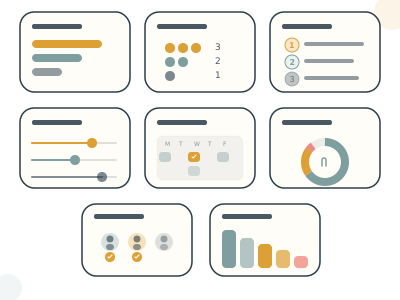
When to use blind voting
Board elections
Elect board members, officers, or representatives without the influence of seeing who's ahead. Loomio supports STV (single transferable vote) elections with anonymous ballots, and STV ballots export for an independent recount without voter identities. Online voting for motions and elections
Sensitive decisions
Budget priorities, personnel matters, or contentious proposals — when the topic is sensitive, anonymous voting lets people express their real position without fear of judgement.
Honest feedback
Get genuine opinions on proposals, strategies, or performance reviews. When votes are anonymous, people are more likely to raise concerns early rather than going along with the group.
Reducing power dynamics
In groups with senior and junior members, blind voting ensures that a manager's early vote doesn't anchor everyone else's response.
Prioritization
Use blind dot voting or score polls to surface the group's real priorities. Without seeing others' allocations, each person distributes their points based on genuine preference.
Compliance and governance
Some constitutions or bylaws require secret ballots for motions and elections. Loomio can keep voter identities separate from their votes, apply a quorum and pass threshold, and export the poll results for your records.
How blind voting works in Loomio
When you enable anonymous voting, Loomio applies these protections together:
Anonymous votes
Submitted votes are not associated with voter identities or participation records. Written reasons and attachments are not available because they could identify a voter.
Results hidden until close
Results stay hidden from participants, poll coordinators, group administrators, and instance administrators until the poll closes.
Use these advanced settings with Loomio proposals and polls, including:
- Simple polls (single or multiple choice)
- Score polls
- Dot voting
- Ranked choice
- Proposals (consent and consensus)
- STV elections
Questions about blind voting
Are blind voting and anonymous voting the same?
Yes. In Loomio, blind voting is the anonymous voting mode. It separates voter identities from submitted votes and hides results until the poll closes.
When can participants see the result?
Participants can see the aggregate result after the poll closes. Results are hidden from everyone while voting is open.
Can an anonymous poll be reopened?
No. Loomio discards voter identity information for an anonymous poll, so an anonymous poll cannot be reopened after it closes.
How do I protect a secret ballot?
Enable anonymous voting before the poll starts. Loomio hides results until the poll closes and prevents submitted votes from including written reasons or attachments.
Blind voting vs open voting
Neither approach is always better — the right choice depends on the decision. Loomio supports both, so your group can choose the right mode for each situation.
Use blind voting when:
- Power dynamics could influence votes
- The topic is sensitive or contentious
- You need to comply with secret ballot requirements
- You want honest prioritization
Use open voting when:
- Accountability matters — you want to know who stands where
- The group is building shared understanding through dialogue
- You want to follow up with individuals about their reasoning
- Trust is high and social pressure isn't a concern
Try blind voting with your group
Start a free trial and create your first anonymous poll in minutes. No credit card required.